theADHD Desk

Cold Start

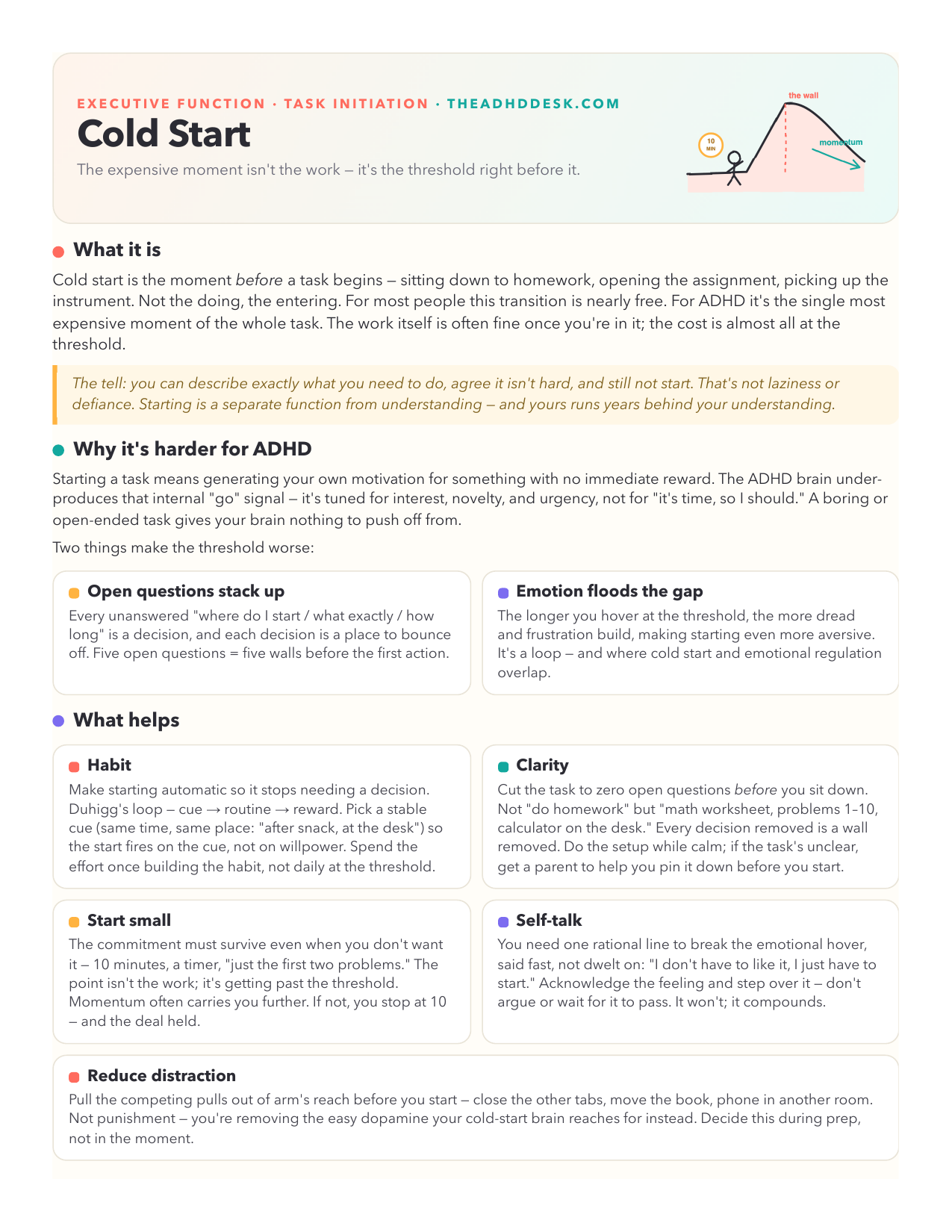
Knows what to do, agrees it isn't hard, still can't start. Why the threshold — the moment before a task begins — is the single most expensive part of the whole task for an ADHD brain, and a five-step routine to get past it.
↓ Download PDFView / print2 pages · Letter · updated June 2026
Cold Start — page 1Cold Start — page 2

What helps

  • Habit. Make starting automatic so it stops needing a decision. A stable cue — same time, same place — fires the start instead of willpower.
  • Clarity. Cut the task to zero open questions before you sit down. “Math worksheet, problems 1–10, calculator on the desk” — every decision removed is a wall removed.
  • Start small. A commitment small enough to survive even when you don't want it — ten minutes, a timer. The point is getting past the threshold; momentum often carries you further.
  • Self-talk. One rational line, said fast and not dwelt on: “I don't have to like it, I just have to start.” Acknowledge the feeling and step over it.
  • Reduce distraction. Pull the competing pulls out of reach before you start — tabs closed, phone in another room — removing the easy dopamine your cold-start brain reaches for.

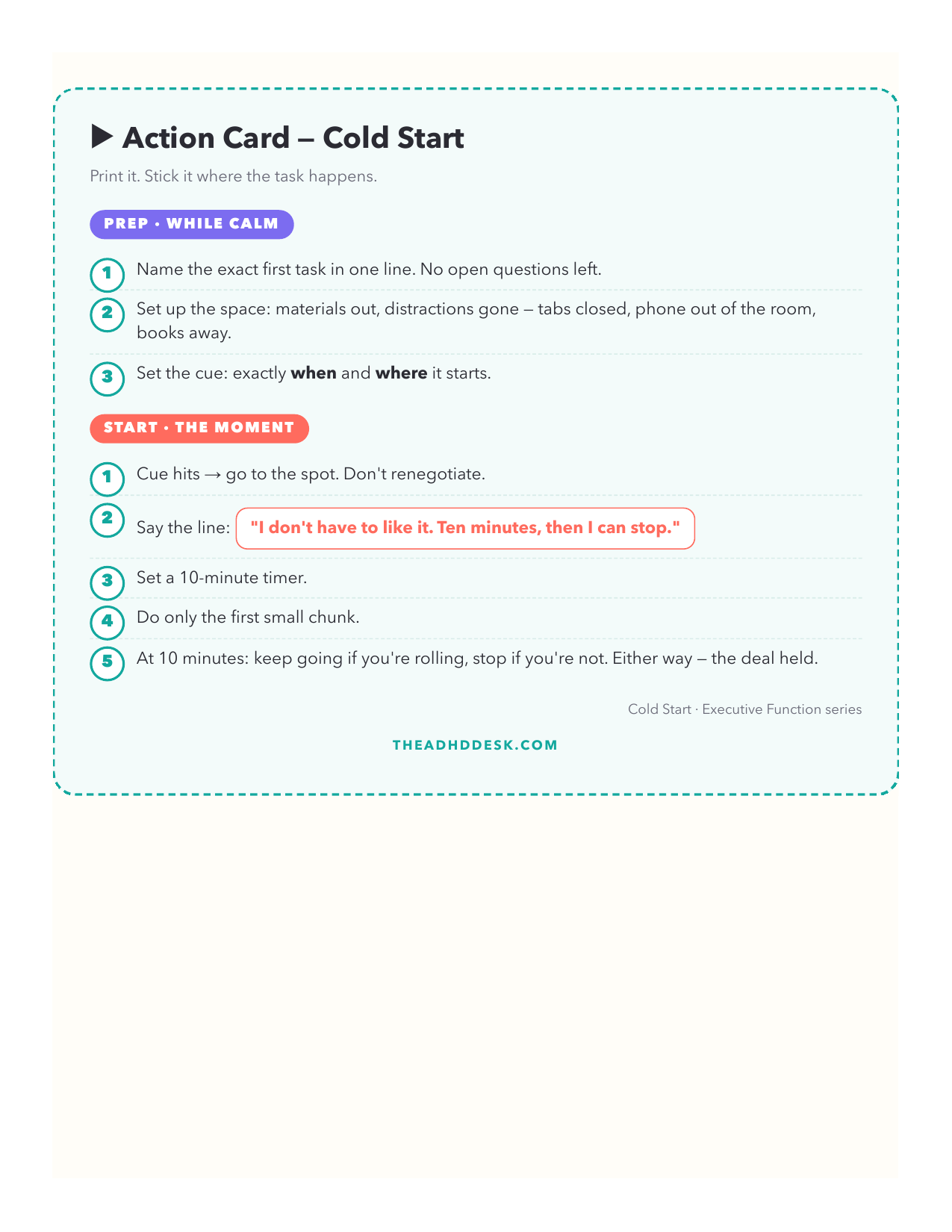
The action card

Prep · while calm

  1. Name the exact first task in one line. No open questions left.
  2. Set up the space: materials out, distractions gone.
  3. Set the cue: exactly when and where it starts.

Start · the moment

  1. Cue hits → go to the spot. Don't renegotiate.
  2. Say the line: “I don't have to like it. Ten minutes, then I can stop.”
  3. Set a 10-minute timer.
  4. Do only the first small chunk.
  5. At 10 minutes: keep going if you're rolling, stop if you're not. Either way, the deal held.

Not medical advice

A practical, plain-language reference. It doesn't replace assessment or treatment from a clinician who knows the individual.