When your child has ADHD. Start with the books.
If you have ADHD yourself, see also ADHD and parenting.
What’s different
The child doesn’t make the decisions. Treatment order inverts the adult playbook: under 6, behavioural intervention and parent training are first-line per AAP 2019; medication is added only if behaviour therapy isn’t enough.
What’s the same
Same condition underneath. ADHD heritability is ~74% (Faraone & Larsson 2019), so a child’s diagnosis often surfaces a parent’s. Stimulants respond at ~70% to first-tried, ~85–90% after trying the alternative class.
Start with these six books
6 titles · cross-source selected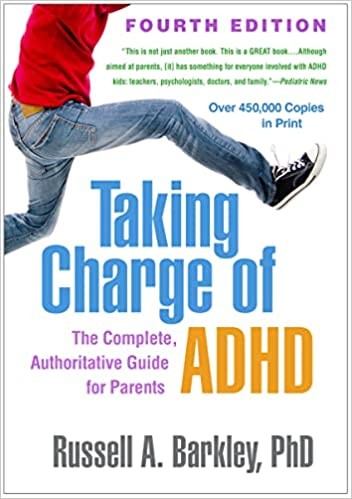
Taking Charge of ADHD
Russell A. Barkley
4th ed., 2020
The anchor of the shelf. On all 6 cross-source lists. Dense, comprehensive, from the field's most-cited researcher. Read the chapters that match where you are; don't try to read it through.
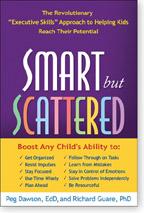
Smart but Scattered
Peg Dawson & Richard Guare
2009 (continually supplemented)
On 6 of 6 lists. The framework most schools and EF coaches now use. The 11-skill inventory in chapter 2 is worth doing on day one — it tells you what to scaffold.

The Explosive Child
Ross W. Greene
6th ed., 2021
Read this when the word 'oppositional' shows up in the report. Collaborative & Proactive Solutions — 'kids do well if they can' — not behaviour charts. For free background on the approach, see Lives in the Balance below.
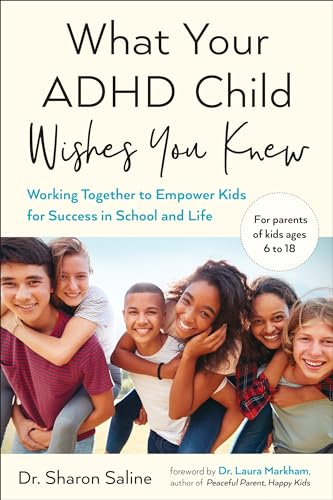
What Your ADHD Child Wishes You Knew
Sharon Saline, PsyD
2018
Built from interviews with the kids themselves. Best counterweight when the adult-shaped books start to feel like they're talking past the child.
Wrightslaw: From Emotions to Advocacy
Pam & Pete Wright
2nd ed., 2006
Old base edition, but IDEA hasn't changed and the companion site updates the case law. Read before any school meeting. The only top-shelf book older than 2010 — it survives on uniqueness.
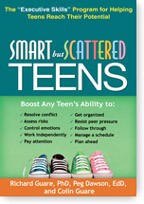
Smart but Scattered Teens
Richard Guare, Peg Dawson & Colin Guare
2013
The teen-stage application of the EF framework. The shift here is collaboration over scaffolding — the kid runs the system, you advise.
Focus areas, in roughly the order they come up
Most parents arrive after one of three things: a teacher conference, a younger sibling who's obviously easier, or their own diagnosis sending them looking. The AAP guideline puts diagnosis squarely inside primary care — your pediatrician's well-child visit is a legitimate starting point, no specialist referral required to begin. A defensible evaluation pulls rating-scale data from both home and school (Vanderbilt, Conners-3, BASC-3), screens for the usual comorbidities (anxiety, learning disabilities, sleep, ODD, ASD, tics), and documents impairment in specific domains. If a report lacks any of those four, push back — the AAP guideline gives you standing.
Go deeper
Wolraich et al. — the actual guideline your pediatrician is following. Skim before the first appointment so you know what a complete evaluation looks like.
Prevalence data, co-occurring condition rates, behaviour-therapy provider checklists. Useful when a school or pediatrician is downplaying the diagnostic seriousness.
The single best parent-facing overview if you want one read-through. Strong on what an evaluation should and shouldn't include.
Trusted sources
The nine US-focused organisations cited most often when parents ask each other “where do I go for help?” — ranked by combined citation frequency and editorial quality. Bookmark two or three; you’ll come back to them.
The default US nonprofit anchor. Parent to Parent training, the federally-funded National Resource Center on ADHD, local chapters. If you only bookmark one, bookmark this.
Most-cited single content destination. Practical articles, expert webinars (Barkley, Greene), reader essays. Watch for the line between editorial and sponsored content.
Dominant resource for school and learning-differences framing. Best IEP/504 explainers on the open web.
Clinician-written, parent-facing. Strong editorial standards. The 'Complete Guide to ADHD' is the cleanest single read.
American Academy of Pediatrics' parent-facing site. Reflects the 2019 clinical practice guideline — what your pediatrician is actually following.
The default US-government source for prevalence numbers, co-occurring condition data, and behaviour-therapy provider checklists.
Special-education law. IEP, 504, due process, letter templates. Frankly partisan toward parents — which is what you'll want at a contested school meeting.
American Academy of Child & Adolescent Psychiatry guide. Underrated next to the bigger names. No pharma sponsorship. Use when the medication conversation gets serious.
The only individual clinician with institutional-tier citation volume. Free fact sheets, YouTube lectures. 'Watch the Barkley lectures' is a near-meme answer to 'where do I start?'
From the community
“Asked for one accommodation, not ten: extended time on tests and a quiet room for the state assessment. Framed it as 'her psychologist recommended this specifically.' Approved in the first meeting. Added the rest over the next year.”
“Stopped the morning fight by moving everything to the night before. Backpack packed, clothes out, breakfast decided. Mornings still aren't great but they're no longer a daily breakdown.”
“Tracked sleep, appetite, mood, and one teacher observation in a simple shared note. Two weeks of data made the dose conversation with the pediatrician 10x faster.”
“Started reading my son's diagnostic report and recognised myself on every page. Got my own evaluation six months later. The household runs differently now that two of us know.”