Emotion Management
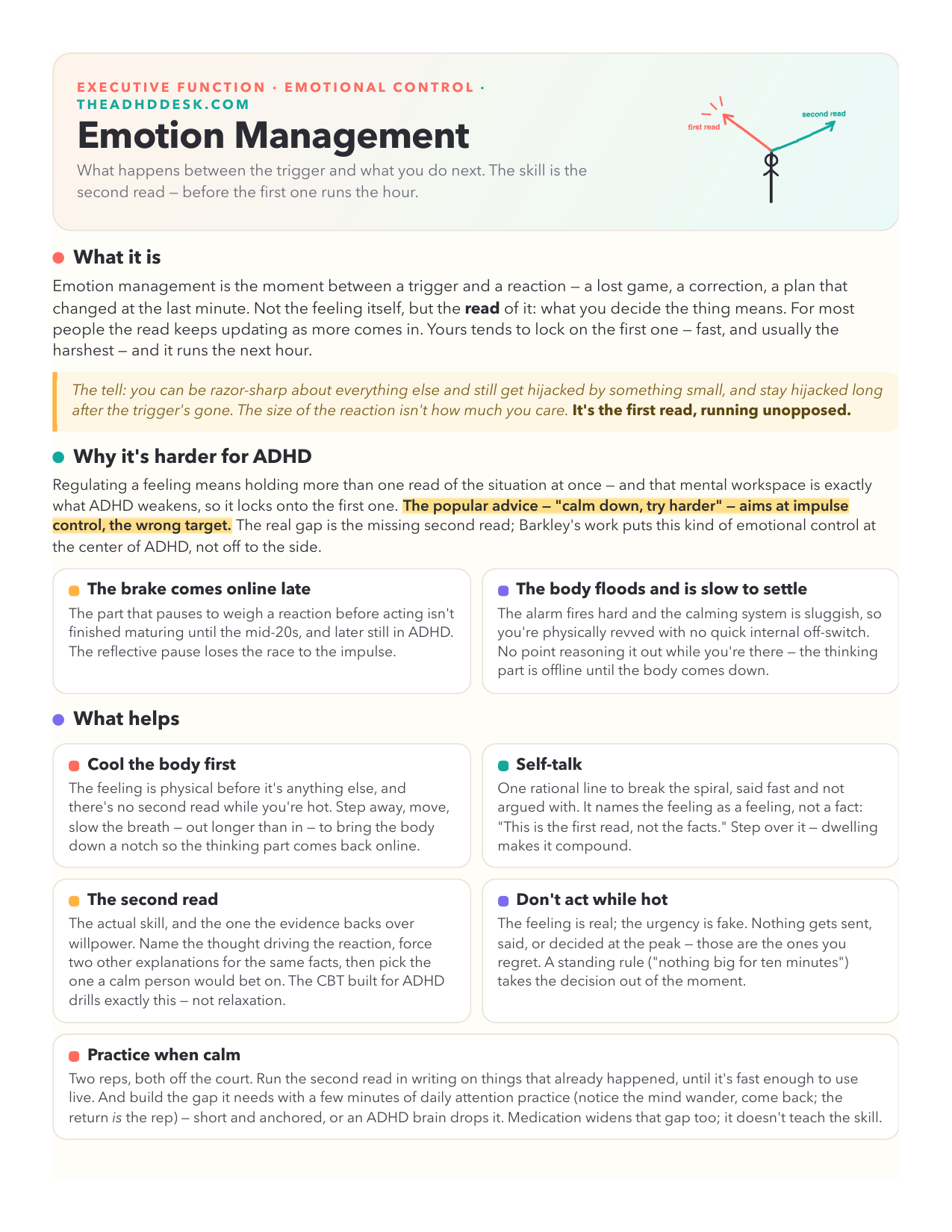
The first read of a situation grabs the wheel before a second one can form. Why ADHD makes emotional regulation a reappraisal problem — getting a second read — rather than an impulse-control problem, and what to do when a feeling takes over.
What helps
- Cool the body first. The feeling is physical before it's anything else — there's no second read while you're hot. Step away, move, slow the breath to bring the body down a notch.
- Self-talk. One rational line, said fast and not argued with, that names the feeling as a feeling: “This is the first read, not the facts.”
- The second read. The actual skill: name the thought driving the reaction, force two other explanations for the same facts, then pick the one a calm person would bet on.
- Don't act while hot. The feeling is real; the urgency is fake. Nothing gets sent, said, or decided at the peak. A standing rule — “nothing big for ten minutes.”
- Practice when calm. Two reps off the court: run the second read in writing on things that already happened, and build the gap it needs with a few minutes of daily attention practice.
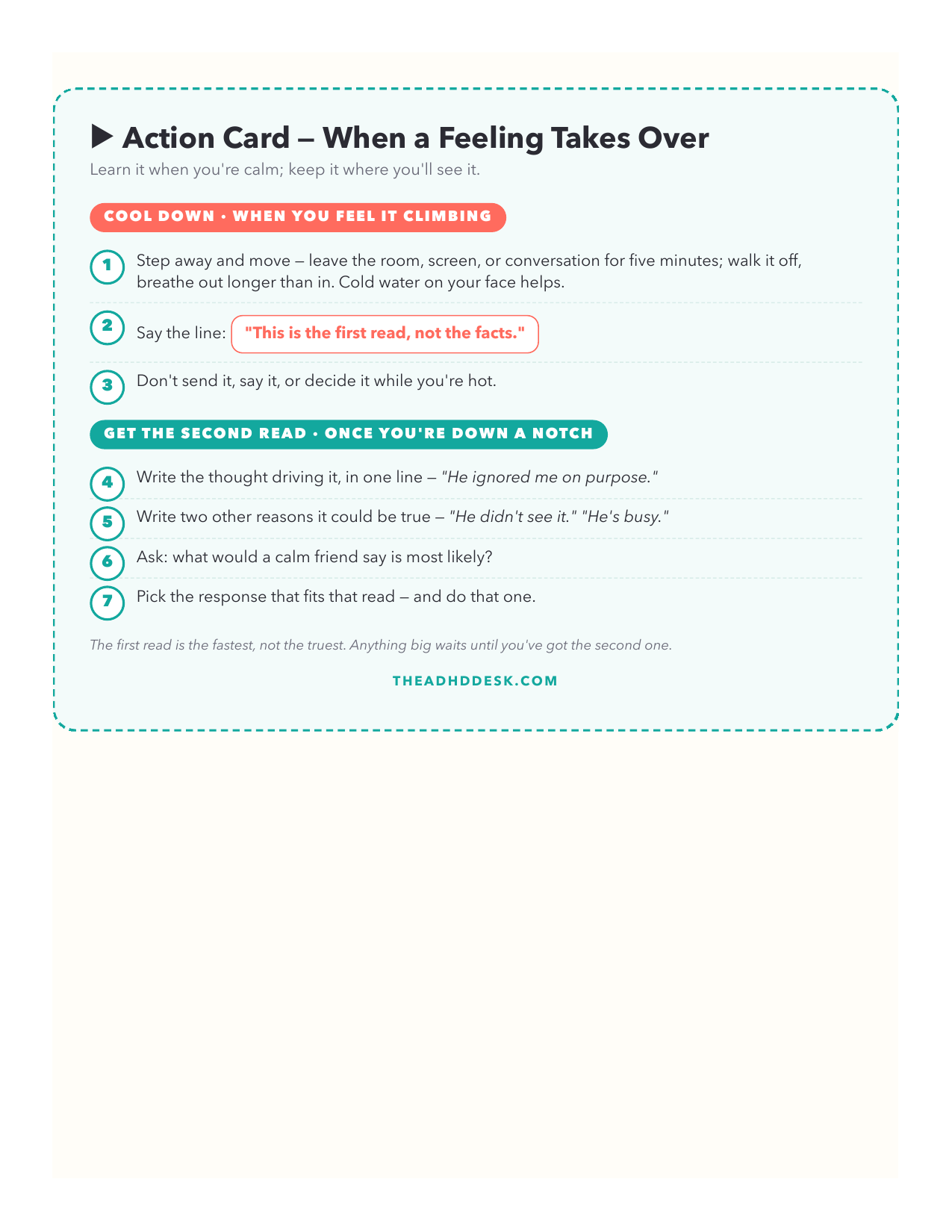
The action card
Cool down · when you feel it climbing
- Step away and move — leave the room, screen, or conversation for five minutes; breathe out longer than in.
- Say the line: “This is the first read, not the facts.”
- Don't send it, say it, or decide it while you're hot.
Get the second read · once you're down a notch
- Write the thought driving it, in one line — “He ignored me on purpose.”
- Write two other reasons it could be true — “He didn't see it.” “He's busy.”
- Ask: what would a calm friend say is most likely?
- Pick the response that fits that read — and do that one.
Not medical advice
A practical, plain-language reference. It doesn't replace assessment or treatment from a clinician who knows the individual.