theADHD Desk

Rejection Sensitivity

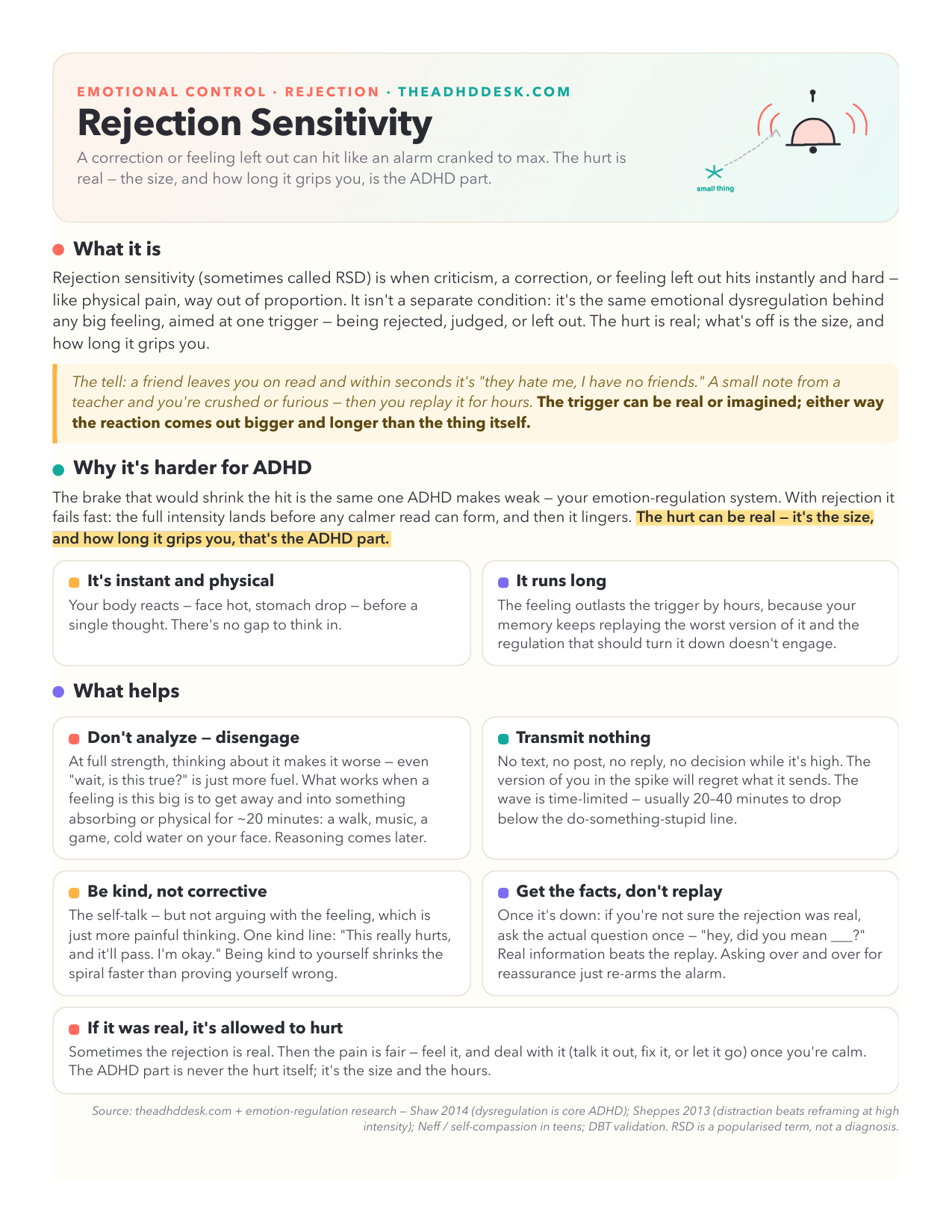
Criticism, a correction, or feeling left out can hit instantly and hard — like physical pain, way out of proportion. Why this is emotional dysregulation aimed at one trigger (not a separate diagnosis), and what to do when it hits: disengage instead of analyse, and be kind rather than corrective. The hurt can be real — the size and how long it grips you is the ADHD part.
↓ Download PDFView / print2 pages · Letter · updated June 2026
Rejection Sensitivity — page 1Rejection Sensitivity — page 2

What helps

  • Don't analyze — disengage. At full strength, thinking about it makes it worse — even “is this true?” is just more fuel. What works when a feeling is this big is to get away and into something absorbing or physical for ~20 minutes: a walk, music, a game, cold water on your face. Reasoning comes later.
  • Transmit nothing. No text, post, reply, or decision while it's high — the version of you in the spike will regret what it sends. The wave is time-limited, usually 20–40 minutes to drop below the do-something-stupid line.
  • Be kind, not corrective. The self-talk — but not arguing with the feeling, which is just more painful thinking. One kind line: “This really hurts, and it'll pass.” Self-kindness shrinks the spiral faster than proving yourself wrong.
  • Get the facts, don't replay. Once it's down: if you're not sure the rejection was real, ask the actual question once — “hey, did you mean ___?” Real information beats the replay. Looping for reassurance just re-arms the alarm.
  • If it was real, it's allowed to hurt. Sometimes the rejection is real. Then the pain is fair — feel it, and deal with it (talk it out, fix it, or let it go) once you're calm. The ADHD part is never the hurt itself; it's the size and the hours.

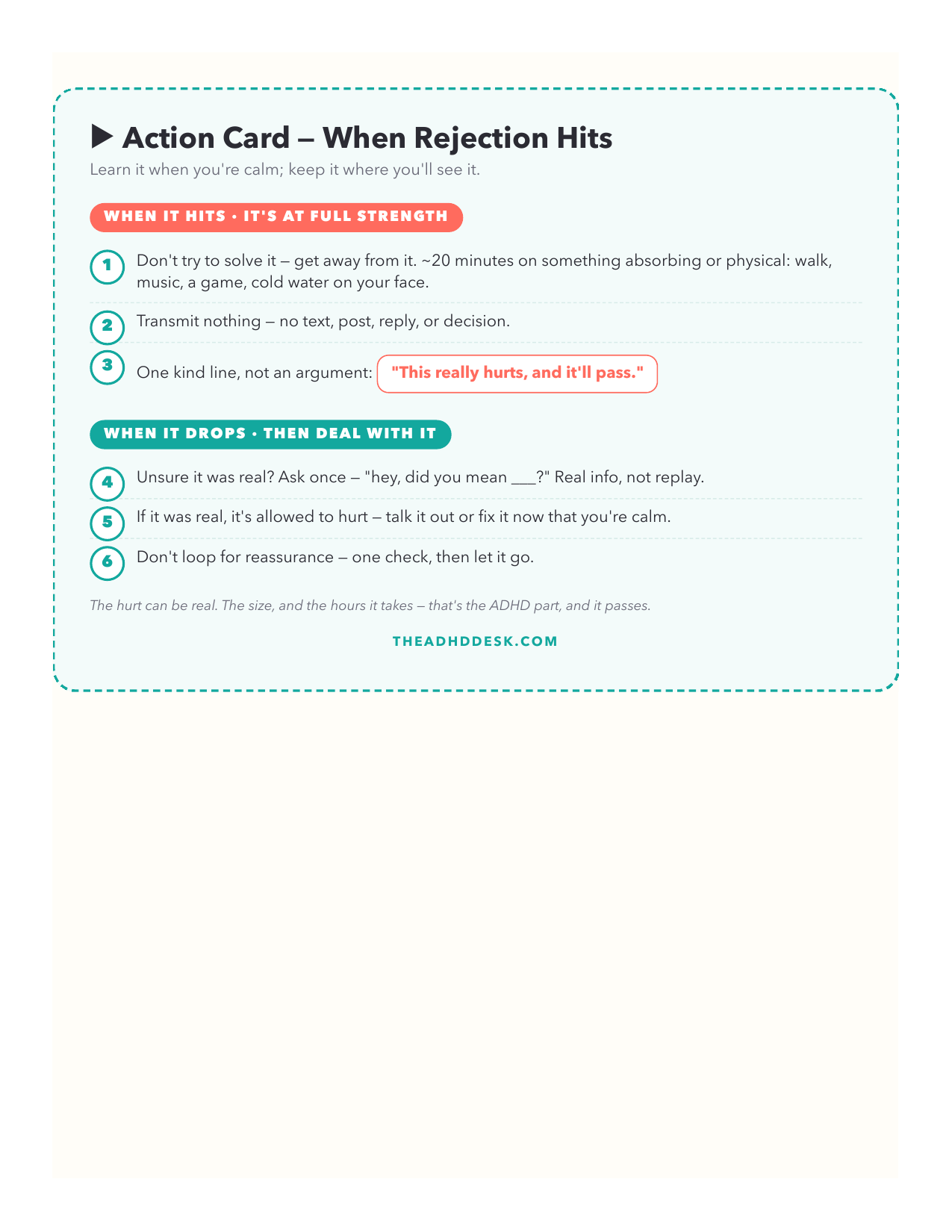
The action card

When it hits · it's at full strength

  1. Don't try to solve it — get away from it. ~20 minutes on something absorbing or physical: walk, music, a game, cold water on your face.
  2. Transmit nothing — no text, post, reply, or decision.
  3. One kind line, not an argument: “This really hurts, and it'll pass.”

When it drops · then deal with it

  1. Unsure it was real? Ask once — “hey, did you mean ___?” Real info, not replay.
  2. If it was real, it's allowed to hurt — talk it out or fix it now that you're calm.
  3. Don't loop for reassurance — one check, then let it go.

Not medical advice

A practical, plain-language reference. It doesn't replace assessment or treatment from a clinician who knows the individual.