Sleep
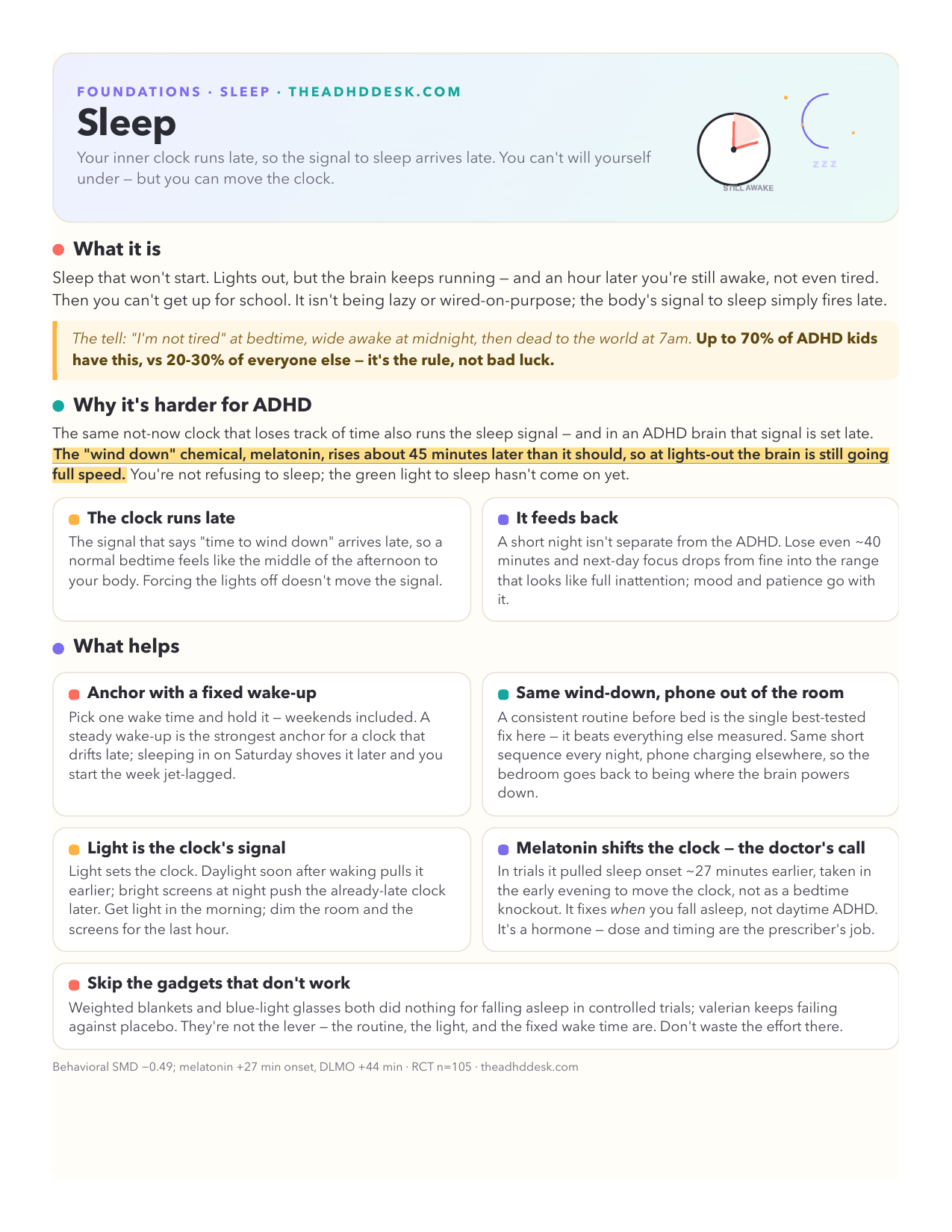
Lights out, but the brain keeps running — still wide awake an hour later, then impossible to wake for school. Why an ADHD brain's sleep signal fires about 45 minutes late (a delayed clock, not bad behavior), what the evidence actually backs — a fixed wake time, a consistent wind-down, morning light, and early-evening melatonin as the prescriber's call — and which popular fixes to skip.
What helps
- Anchor with a fixed wake-up. Pick one wake time and hold it — weekends included. A steady wake-up is the strongest anchor for a clock that drifts late; sleeping in on Saturday shoves it later and you start the week jet-lagged.
- Same wind-down, phone out of the room. A consistent routine before bed is the single best-tested fix here — it beats everything else measured. Same short sequence every night, phone charging elsewhere, so the bedroom goes back to being where the brain powers down.
- Light is the clock's signal. Light sets the clock. Daylight soon after waking pulls it earlier; bright screens at night push the already-late clock later. Get light in the morning; dim the room and the screens for the last hour.
- Melatonin shifts the clock — the doctor's call. In trials it pulled sleep onset ~27 minutes earlier, taken in the early evening to move the clock, not as a bedtime knockout. It fixes when you fall asleep, not daytime ADHD. It's a hormone — dose and timing are the prescriber's job.
- Skip the gadgets that don't work. Weighted blankets and blue-light glasses both did nothing for falling asleep in controlled trials; valerian keeps failing against placebo. They're not the lever — the routine, the light, and the fixed wake time are. Don't waste the effort there.
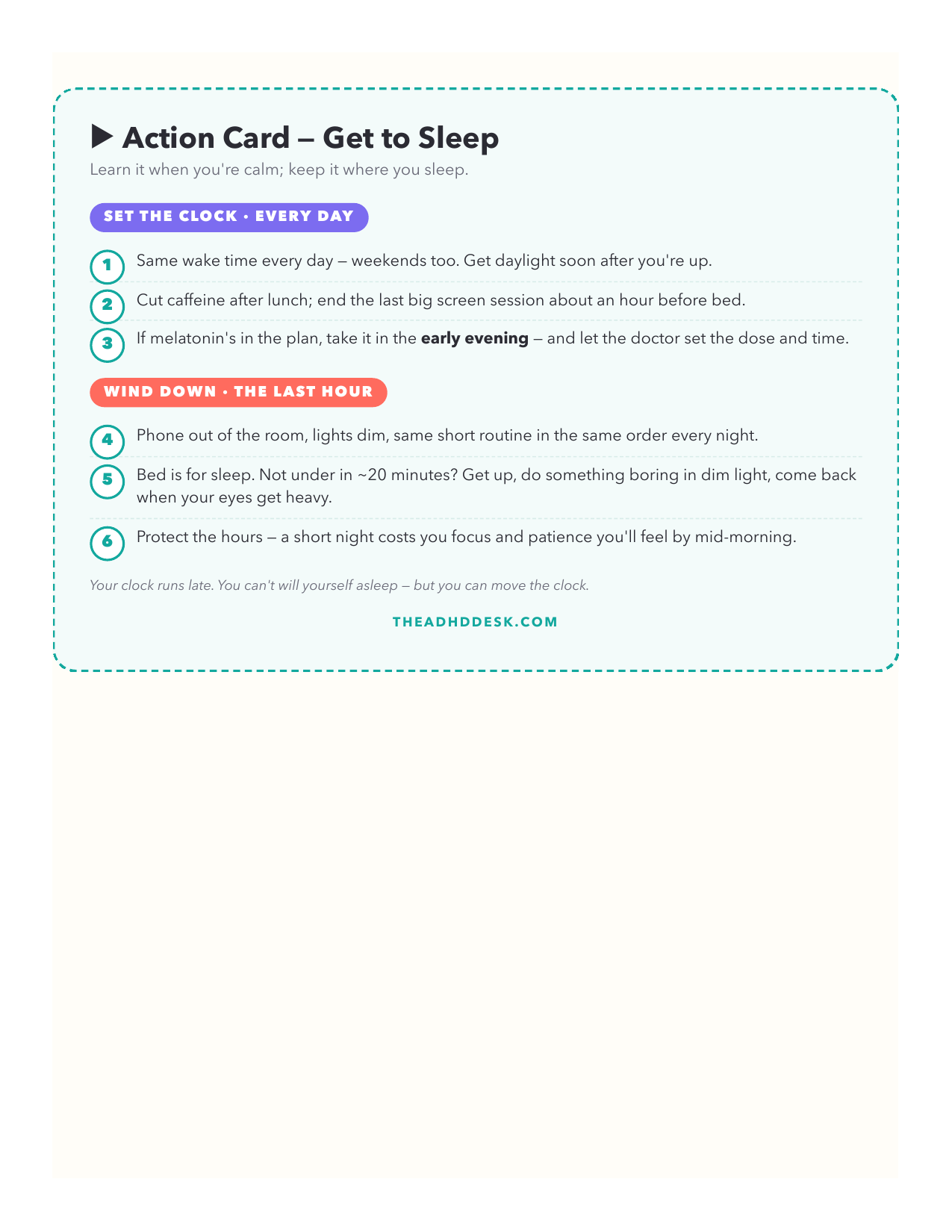
The action card
Set the clock · every day
- Same wake time every day — weekends too. Get daylight soon after you're up.
- Cut caffeine after lunch; end the last big screen session about an hour before bed.
- If melatonin's in the plan, take it in the early evening — and let the doctor set the dose and time.
Wind down · the last hour
- Phone out of the room, lights dim, same short routine in the same order every night.
- Bed is for sleep. Not under in ~20 minutes? Get up, do something boring in dim light, come back when your eyes get heavy.
- Protect the hours — a short night costs you focus and patience you'll feel by mid-morning.
Not medical advice
A practical, plain-language reference. It doesn't replace assessment or treatment from a clinician who knows the individual.