theADHD Desk

Working Memory

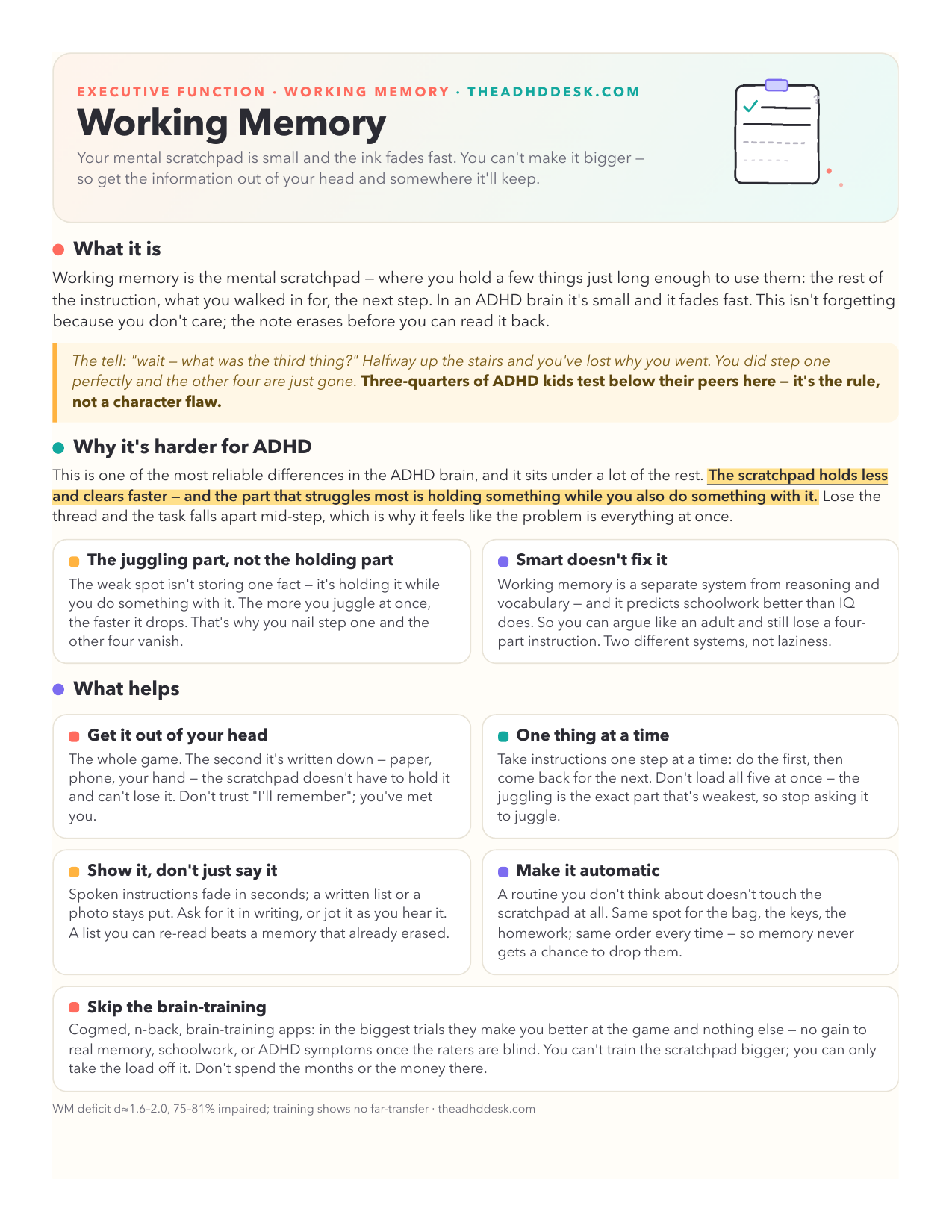
Forgets the third step, walks into a room and forgets why, does one part of a job and loses the rest. Why working memory — the mental scratchpad that holds a few things just long enough to use them — is small and fades fast in an ADHD brain, why you can't train it bigger (the brain-training evidence is settled), and the move that actually works: get the information out of your head and somewhere it'll keep.
↓ Download PDFView / print2 pages · Letter · updated June 2026
Working Memory — page 1Working Memory — page 2

What helps

  • Get it out of your head. The whole game. The second it's written down — paper, phone, your hand — the scratchpad doesn't have to hold it and can't lose it. Don't trust “I'll remember”; you've met you.
  • One thing at a time. Take instructions one step at a time: do the first, then come back for the next. Don't load all five at once — the juggling is the exact part that's weakest, so stop asking it to juggle.
  • Show it, don't just say it. Spoken instructions fade in seconds; a written list or a photo stays put. Ask for it in writing, or jot it as you hear it. A list you can re-read beats a memory that already erased.
  • Make it automatic. A routine you don't think about doesn't touch the scratchpad at all. Same spot for the bag, the keys, the homework; same order every time — so memory never gets a chance to drop them.
  • Skip the brain-training. Cogmed, n-back, brain-training apps: in the biggest trials they make you better at the game and nothing else — no gain to real memory, schoolwork, or ADHD symptoms once the raters are blind. You can't train the scratchpad bigger; you can only take the load off it. Don't spend the months or the money there.

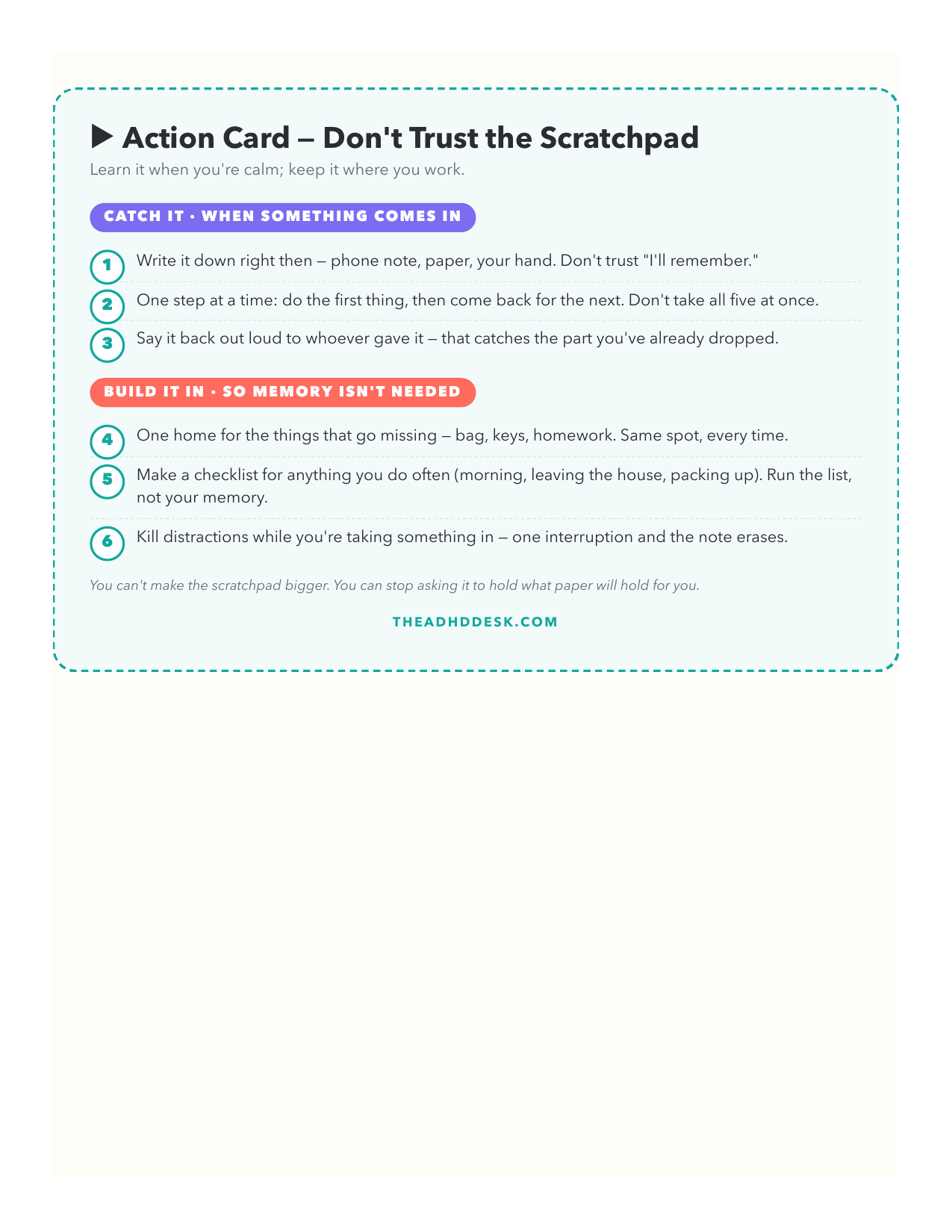
The action card

Catch it · when something comes in

  1. Write it down right then — phone note, paper, your hand. Don't trust “I'll remember.”
  2. One step at a time: do the first thing, then come back for the next. Don't take all five at once.
  3. Say it back out loud to whoever gave it — that catches the part you've already dropped.

Build it in · so memory isn't needed

  1. One home for the things that go missing — bag, keys, homework. Same spot, every time.
  2. Make a checklist for anything you do often (morning, leaving the house, packing up). Run the list, not your memory.
  3. Kill distractions while you're taking something in — one interruption and the note erases.

Not medical advice

A practical, plain-language reference. It doesn't replace assessment or treatment from a clinician who knows the individual.